

How to Streamline Your Order Fulfillment Process for Faster Shipping
Most conversations about shipping speed start with software. Better systems, smarter dashboards, tighter integrations. But a warehouse management system doesn’t move a single pallet. The physical environment – the layout, the equipment, the distance between a product and a packing station – determines whether your operation is fast or slow. Software surfaces the data. The floor decides the outcome.
Layout is a speed decision
On average, travel time amounts to half of a picker’s total working hours (Logistics Management). This stat alone should be enough to change the way you view your warehouse blueprint. Every step a picker takes to collect an item is time your customer is kept waiting.
The solution isn’t overly complex, but it will test your commitment. Run a basic ABC inventory classification. Determine your fast-moving items from the slow crawlers and physically re-stow the fast ones as near the pack stations as you can. Your Class A products shouldn’t be on the other side of the building. They should be next to the spot where the final order is being packed and sealed.
Zone picking helps with this. When pickers stay in their lane rather than searching for a needle in a warehouse-sized haystack, travel time naturally decreases, as do picking times. Implement a well-thought zone design and leverage the nearness of the high-flyers, and you’ll witness these performance changes with little to no effort required in the IT department.
Vertical space and equipment match
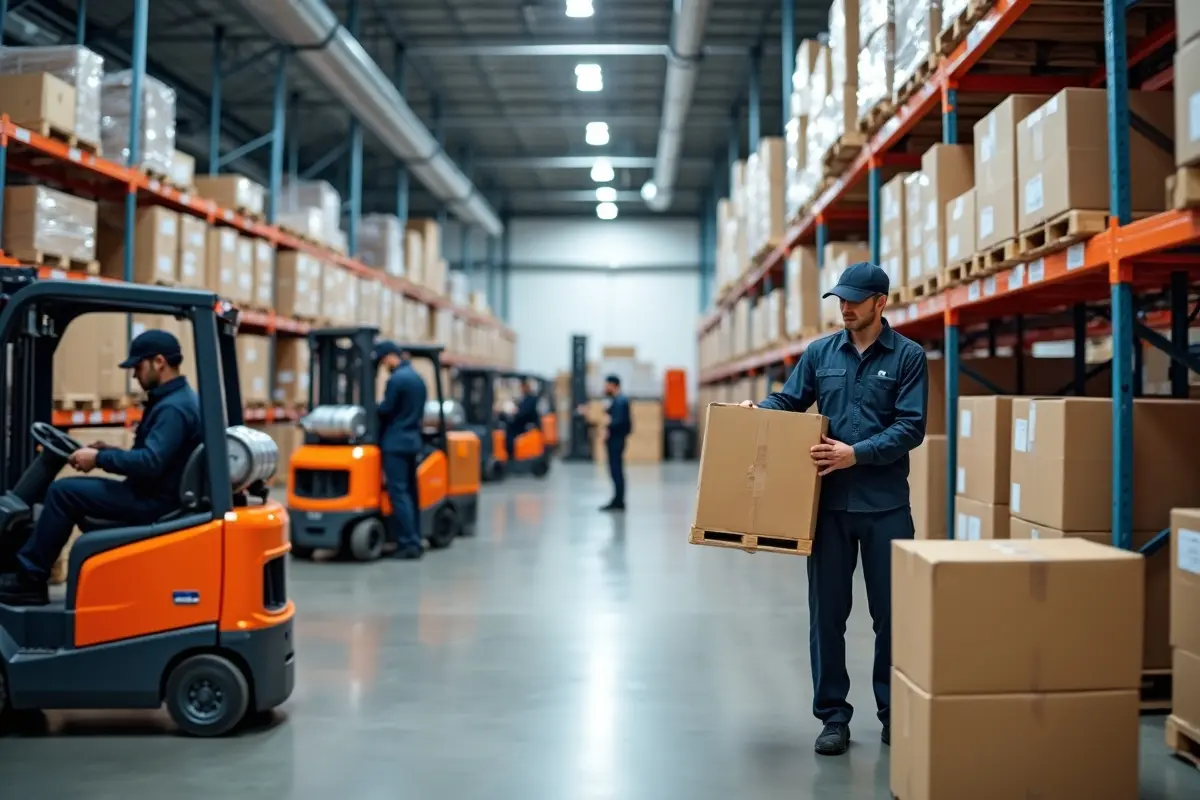
Many warehouses don’t make the most of the space above their heads. High-density racking systems let you store product vertically rather than horizontally, helping you to keep your floor space manageable and avoid cluttering your aisles. But vertical storage solutions will only work if your material handling equipment can reach the heights required.
Many operations lose efficiency here without even realizing it. They invest in the racking but overlook the need for the right equipment to properly service that storage. Different types such as reach trucks and counterbalance forklifts have varied mast heights, aisle requirements, and load capacities. If your equipment isn’t tailored to your shelf configuration, the result will be a bottleneck – either your machine can’t get high enough, or it can’t fit down the aisle.
For operations with bulk pallets or heavy stock, the right machinery is not just optimizing its return on investment – it’s non-negotiable. Companies looking at forklifts for sale melbourne and similar heavy-duty equipment should first look at their specific rack heights and aisle widths and ensure their chosen machinery aligns with these.
Reduce touches, reduce errors
Whenever a human hand touches an order that isn’t the final point of picking or packing, it introduces more time for a potential delay and an error in the workflow. The accuracy of order picking is one of the most evident factors in customer satisfaction. A mistakenly picked order not only leads to a return but also to the extra cost of reshipping the correct product.
The solutions provided by mobile barcode scanning eliminate the need for paper lists and manual entries, as the scanners are directly linked and update your WMS system in real time. This ensures up-to-date and accurate inventory counts while also identifying errors right at the picking stage rather than in the shipping area. While this technology has been around, many warehouses still rely on paper-based systems, which introduce more errors into the process.
This warehouse optimization strategy is based on the concept of reducing the number of “touches” that a product receives before it is shipped. If applicable, a further reduction can be achieved through cross-docking, which completely removes the need for storage. Shipments are unloaded from the inbound dock and directly loaded onto outbound trucks. No unnecessary storage time, retrieval time, or movement time.
Standardize the packing process
Small inefficiencies accumulate when packing stations are involved. For instance, an employee searching for an additional fifteen seconds for the correct box or having to cut tape manually can become significant during an eight-hour workday.
To prevent this, you can pre-configure the sizes of the boxes to ensure they apply to the majority of orders you receive. Additionally, you can store those box sizes at the packing station and not in a separate room. It is also helpful to use automated tape dispensers to further eliminate manual work. Packing guides or printed cards that indicate the appropriate box for a product can also help employees make decisions faster.
From a shipping cost perspective, using a larger box than necessary for a small product can increase your carrier costs for each order you process. So, by making the decision easier and standardizing the selection process for different product dimensions, you will incur more predictable costs.
Equipment audits aren’t optional
Outdated or inefficient equipment can cause bottlenecks that will impact your operations regardless of your planning efforts. If a forklift is moving slowly or breaks down during a shift when you’re already at maximum capacity, it won’t just be one task that’s interrupted – receiving, put-away, and replenishment will all grind to a halt.
To prevent this, schedule regular equipment audits and monitor forklift and pallet jack availability. If a machine is frequently down or impeding progress when your warehouse is at its busiest, it’s likely more expensive to keep it around than to replace it. In fact, downtime during peak fulfillment hours is the most expensive downtime you will have.
What actually moves the needle
Faster shipping isn’t a marketing promise – it’s a physics problem. Shorter travel distances, fewer touches, matched equipment, and standardized packing processes are what close the gap between an order placed and an order delivered. WMS and automation matter, but they can only optimize what the physical infrastructure allows. Fix the floor first, then let the software do its job.





0