

The Importance of Benchmarking in High-Performance Computing
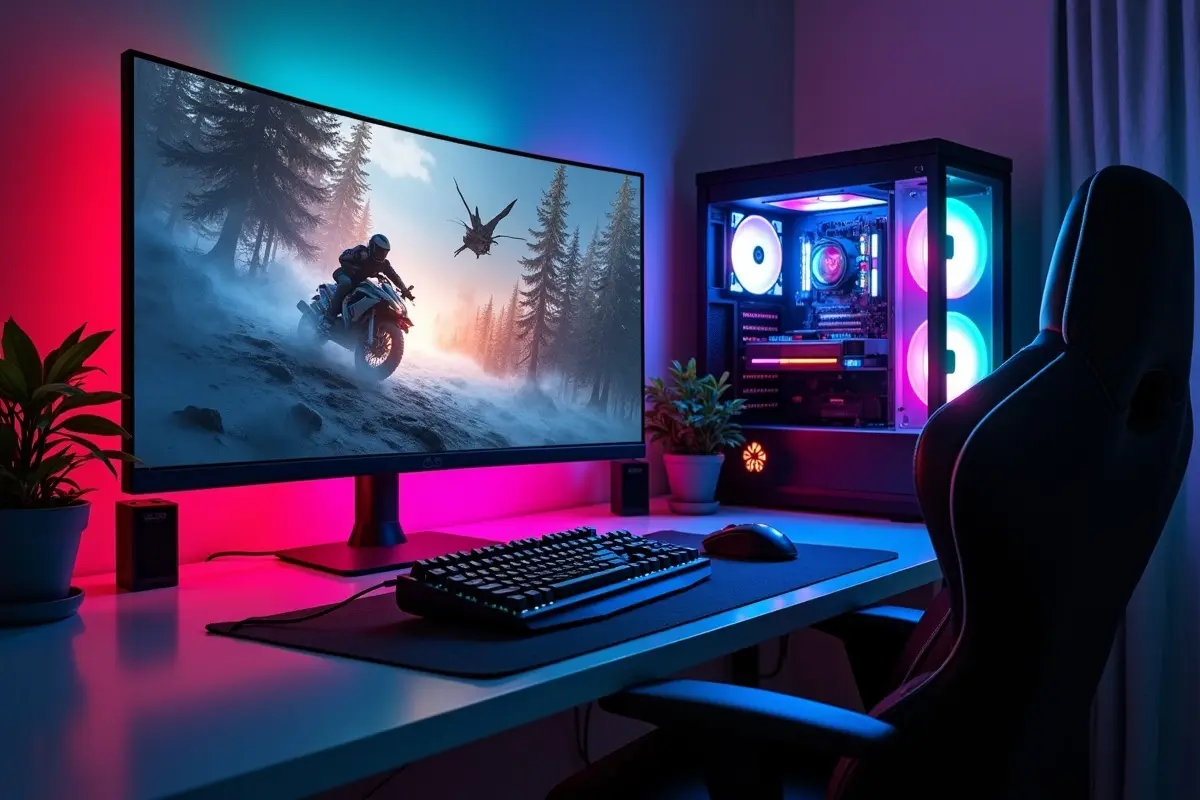
The allure of a compact, yet powerful gaming machine is undeniable. However, the true measure of a mini PC’s high-performance capabilities lies not just in its specifications, but in its validated performance through rigorous benchmarking. This process is crucial for understanding how various components interact, identifying potential bottlenecks, and ensuring system stability under demanding conditions. For those who invest in premium gaming systems, performance validation is paramount.
Benchmarking provides concrete performance metrics, moving beyond theoretical specifications to show real-world capabilities. It allows for a detailed assessment of hardware synergy, revealing how effectively the CPU, GPU, RAM, and storage work together. This is especially important in compact form factors, where thermal management and power delivery can significantly impact sustained performance.
One of the primary goals of benchmarking is bottleneck identification. Even with top-tier components, a poorly optimized system or inadequate cooling can lead to performance limitations. By subjecting a mini gaming PC to various stress tests, engineers can pinpoint weaknesses and optimize the design for maximum efficiency. This dedication to performance and quality is a hallmark of custom gaming hardware.
Integrated Graphics vs. Discrete GPU Performance
When evaluating high-performance mini gaming PCs, a critical distinction lies between integrated GPUs (iGPUs) and discrete GPUs (dGPUs). Recent advancements in iGPU technology, such as AMD’s Radeon 8060S or Radeon 890M, have made them surprisingly capable for gaming, especially at 1080p resolutions. These modern iGPUs can handle many esports titles and even some AAA games at playable frame rates, often benefiting from upscaling technologies like FSR.
However, for demanding titles at higher resolutions like 1440p or 4K, discrete GPUs remain the gold standard. Mini PCs equipped with mobile discrete GPUs, such as the RTX 4060, RTX 4070, or even the upcoming RTX 5080, offer significantly more processing power and dedicated video memory. These systems can deliver smoother frame rates, support higher graphical settings, and enable advanced features like ray tracing and DLSS, providing a more immersive and visually rich gaming experience.
The performance gap between integrated and discrete graphics can be substantial. While an advanced iGPU might achieve 60 FPS in a modern game at 1080p with medium settings, a discrete mobile GPU could push those numbers higher, or maintain similar frame rates at 1440p or even 4K with appropriate settings and upscaling. The choice between them depends heavily on the target resolution and the graphical intensity of the games one intends to play.
| Feature | Integrated GPU (e.g., Radeon 890M) | Discrete GPU (e.g., RTX 4070M) |
| Performance | Good for 1080p esports/light AAA | Excellent for 1080p/1440p/4K AAA |
| Memory | Shares system RAM | Dedicated VRAM (e.g., 8GB, 12GB) |
| Power Draw | Lower | Higher |
| Form Factor | Ultra-compact | Requires slightly larger chassis |
| Ray Tracing | Limited/None | Supported, often with DLSS |
| Cost | Generally lower system cost | Generally higher system cost |
Benchmarking helps quantify these differences, providing tangible evidence of frame rate consistency and overall gaming fluidity across various resolutions. For instance, a system with a powerful discrete GPU will consistently deliver higher frame rates in graphically intensive games like Cyberpunk 2077 or F1 24 compared to even the most advanced iGPU. This detailed performance analysis is essential for discerning the true capabilities of a high-performance mini gaming PC.
Thermal Management and Air-Flow in Custom Gaming Hardware
One of the most critical challenges in designing high-performance mini gaming PCs is effective thermal management. Packing powerful components into a small chassis inherently creates a heat dissipation challenge. Without adequate air-flow cooling, components can quickly reach high temperatures, leading to thermal throttling. This phenomenon reduces CPU and GPU clock speeds to prevent overheating, directly impacting gaming performance and system stability.
Sophisticated cooling solutions are paramount for sustained loads. High-performance mini PCs often employ custom-designed heatsinks, vapor chambers, and optimized fan curves to manage heat efficiently. The chassis design plays a crucial role, dictating air intake and exhaust pathways. Engineers meticulously optimize these pathways to ensure a continuous flow of cool air over critical components while expelling hot air rapidly.
The impact of ambient temperature is also a significant consideration. A well-designed cooling system should perform reliably even in warmer environments. Cooling efficiency is measured not just by peak performance, but by the ability to maintain consistent performance over extended gaming sessions without excessive noise.
Advanced high-performance custom prebuilt gaming PCs integrate intelligent fan control systems that dynamically adjust fan speeds based on workload and temperature, striking a balance between cooling effectiveness and acoustic comfort. This meticulous approach to thermal design ensures that the compact form factor does not compromise the gaming experience.
The Role of AI in Modern Custom Gaming Hardware
Artificial Intelligence (AI) is rapidly transforming various aspects of computing, and its influence on modern custom gaming hardware is becoming increasingly prominent. AI gaming technology is no longer limited to non-player character (NPC) behavior; it is now deeply integrated into system optimization, graphics rendering, and even multitasking.
Many contemporary CPUs and GPUs feature dedicated Neural Processing Units (NPUs) or AI accelerators. These specialized cores are designed to handle machine learning workloads efficiently, offloading tasks from the main CPU cores. This AI-driven performance can manifestation in several ways within an intelligent gaming PC. For instance, AI-powered graphics technologies, such as advanced upscaling and frame generation (e.g., DLSS), use machine learning algorithms to reconstruct high-resolution images from lower-resolution inputs, significantly boosting frame rates without a noticeable loss in visual quality.
Beyond graphics, AI contributes to system optimization by intelligently managing power consumption, fan speeds, and resource allocation based on real-time usage patterns. This results in a more responsive and efficient gaming experience, particularly valuable in mini PCs where every watt and cubic centimeter counts.
AI multitasking capabilities allow the system to prioritize resources for gaming while seamlessly handling background applications or streaming activities. Furthermore, AI-enhanced visuals can improve in-game fidelity through techniques like intelligent denoising for ray tracing or more realistic character animations. As machine learning workloads become more integral to both gaming and productivity, the presence of robust AI capabilities is a key differentiator for high-performance mini gaming PCs.
Maximizing Longevity Through Strategic Hardware Selection
Choosing the right components for a high-performance mini gaming PC is not just about raw power; it’s also about ensuring longevity and future relevance. Strategic hardware selection is key to maximizing the component lifecycle, enabling the system to remain competitive and functional for years to come. This foresight is especially important when you build a high-performance gaming PC, as the initial choices dictate future possibilities.
Future-proofing involves selecting components that are compatible with upcoming technologies and offer pathways for upgrades. This includes choosing platforms with support for the latest CPU generations, high-speed memory, and advanced storage solutions. The efficiency of the power supply unit (PSU) is also crucial, as a high-quality PSU not only delivers stable power but also contributes to the overall reliability and lifespan of all components.
Furthermore, robust driver support from hardware manufacturers ensures that the system continues to receive performance optimizations and bug fixes for new games and applications. When considering prebuilt gaming computers, it is essential to evaluate the quality of the components and the manufacturer’s commitment to long-term support. A well-chosen mini gaming PC, even with its compact size, can be a durable and adaptable investment for both gaming and productivity.
Future-Proofing Your High Performance Gaming PC Build
The compact nature of mini PCs often raises concerns about upgradability, but modern designs are increasingly addressing this. Future-proofing a high-performance gaming PC build involves selecting models that offer pathways for component enhancements, extending the system’s useful life.
One of the most significant advancements in this regard is the integration of external GPU (eGPU) expansion options. Technologies like OCuLink and Thunderbolt ports provide high-bandwidth connections that allow users to connect a powerful external graphics card. This feature is particularly valuable for mini PCs with integrated graphics, as it enables a substantial boost in gaming performance without requiring an internal GPU slot. As games become more graphically demanding, an eGPU can transform a capable productivity mini PC into a formidable gaming machine.
Internal upgradability also remains a key consideration. Adequate RAM allocation is vital, with many high-performance mini PCs supporting up to 64GB or even 128GB of DDR5 memory. Users should look for systems with accessible SODIMM slots for future memory upgrades.
Storage expansion is equally important, with multiple M.2 NVMe SSD slots becoming standard, often supporting the latest PCIe 5.0 standard for lightning-fast load times. The modularity of certain designs allows for easier access to these components, simplifying maintenance and upgrades. These features ensure that custom build gaming PCs can adapt to evolving hardware demands, providing hardware longevity and sustained high performance.
Balancing Productivity and AI-Powered Gaming Performance
High-performance mini gaming PCs are often sought after for their versatility, serving as both powerful gaming rigs and capable workstations. Balancing productivity and AI-powered gaming performance requires careful consideration of the CPU, GPU, and memory configurations.
For demanding professional workflows such as video editing, 3D rendering, or complex content creation, a robust multi-core CPU and ample RAM are essential. Many mini PCs now feature high-core count mobile processors that excel in these tasks. When combined with a capable discrete GPU, these systems can handle 4K rendering and other intensive applications with efficiency.
The integration of AI further enhances this balance. An AI-driven gaming rig can leverage its NPU and GPU’s AI capabilities for tasks beyond gaming, such as accelerating video encoding, running AI-powered design tools, or processing large datasets for machine learning applications. This makes the mini PC an AI-ready gaming PC, capable of intelligent multitasking.
AI-enhanced gaming, through technologies like DLSS or FSR, not only improves frame rates but also allows for higher graphical fidelity, benefiting both the gaming and visual content creation experience. The ability of a high-performance gaming PC build to seamlessly transition between these demanding workloads underscores its value as a comprehensive computing solution.
Connectivity and Port Standards for the Modern Gamer
In the era of high-performance mini gaming PCs, robust and versatile connectivity is as crucial as raw processing power. Modern gamers and power users require a comprehensive array of ports and wireless standards to ensure low latency, seamless peripheral integration, and multi-monitor support.
High-speed data transfer is facilitated by the latest USB standards, with USB4 and Thunderbolt ports becoming increasingly common. These versatile ports offer exceptional bandwidth, supporting external storage, high-resolution displays, and eGPU enclosures, which are vital for future-proofing and expanding the capabilities of a compact system.
For networking, the adoption of 2.5Gb Ethernet provides a significant upgrade over traditional Gigabit Ethernet, ensuring minimal latency and high bandwidth for online gaming and large file transfers. Complementing this, advanced wireless standards like Wi-Fi 7 offer ultra-fast, low-latency wireless connectivity, crucial for setups where a wired connection is not feasible. Bluetooth 5.3 further enhances peripheral connectivity, allowing for reliable connections to wireless headsets, controllers, and other accessories.
The ability to support multiple displays, often through a combination of HDMI, DisplayPort, and USB-C outputs, is also a key feature for both immersive gaming setups and productive workstations. A well-equipped pc pre built for gaming or a gaming pc pre built with these modern connectivity options ensures a smooth, responsive, and adaptable user experience, truly embodying the capabilities of a high-performance desktop PC.
Whether you are looking for a machine to dominate the latest AAA titles or a workstation to handle complex AI-driven tasks, understanding the data behind the hardware is essential. Ready to elevate your setup with a rig that has been tested for peak performance? Explore our latest high-performance options and find the perfect fit for your desk today. Check out our high-performance series here.





0